Understanding the intricacies of language can often feel overwhelming, especially when faced with the complexities of grammar. One of the essential aspects of grammar that often trips up learners is the prepositional phrase. Diagramming prepositional phrases is a technique that can simplify your understanding and help you visualize the relationships between words in a sentence. In this article, we will explore how to effectively diagram a prepositional phrase, breaking down the process into manageable steps while providing tips and examples to enhance your learning experience.
What is a Prepositional Phrase?
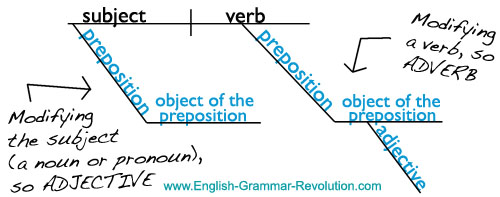
A prepositional phrase consists of a preposition followed by a noun or pronoun, known as the object of the preposition. This combination can provide additional context about time, location, direction, and more in a sentence. For example, in the sentence “The cat is under the table,” the phrase “under the table” is a prepositional phrase that indicates the location of the cat. Understanding this structure is key to effective diagramming.
Components of a Prepositional Phrase
To successfully diagram a prepositional phrase, it’s important to know its components:
- Preposition: The word that shows the relationship between the noun and the rest of the sentence. Examples include “in,” “on,” “at,” “under,” and “between.”
- Object of the Preposition: The noun or pronoun that follows the preposition and completes the phrase. In our earlier example, “table” is the object of the preposition “under.”
- Modifiers: Adjectives or articles that may modify the object of the preposition, providing more detail. For instance, in “under the small table,” “small” modifies “table.”
How to Diagram a Prepositional Phrase
Now that we understand the components of a prepositional phrase, we can dive into the steps for diagramming it. Here’s a straightforward method:
- Identify the Prepositional Phrase: Look for the preposition in the sentence. Mark it and determine the object of the preposition.
- Draw the Diagram: Start with a horizontal line for the main clause of the sentence. Then, draw a vertical line to separate the prepositional phrase from the main clause.
- Position the Preposition: Write the preposition on the lower line and connect it to the vertical line you drew. This indicates that it is part of the prepositional phrase.
- Add the Object: Write the object of the preposition to the right of the preposition. If there are modifiers, place them before the object, connected with a diagonal line.
Example of Diagramming a Prepositional Phrase

Let’s take a closer look at our initial example: “The cat is under the table.” Here’s how to diagram this prepositional phrase:
- Identify: The preposition is “under” and the object is “table.”
- Diagram: Draw a horizontal line representing the main clause. Introduce a vertical line for the prepositional phrase.
- Preposition: Write “under” on the lower line.
- Object: Write “table” to the right of “under”, and if you include the article “the,” it would be placed before “table” with a diagonal line.
The final diagram visually represents the structure of the phrase, making it easier to understand the relationship between the words.
Tips for Effective Diagramming
To ensure that you master the art of diagramming prepositional phrases, consider the following tips:
- Practice Regularly: The more you practice diagramming sentences, the more comfortable you will become with identifying phrases and their components.
- Use Color Coding: Consider using different colors for prepositions, objects, and modifiers to make the relationships more visually distinct.
- Study Examples: Review various examples of sentences with prepositional phrases to familiarize yourself with different structures.
Common Mistakes to Avoid

Even experienced learners can make mistakes when diagramming prepositional phrases. Here are some common pitfalls to watch out for:
- Ignoring Modifiers: Always remember to include modifiers in your diagram to fully represent the phrase.
- Misplacing the Vertical Line: Ensure that the vertical line separating the prepositional phrase from the main clause is correctly positioned to avoid confusion.
- Omitting the Preposition: The preposition is a crucial part of the phrase; do not forget to include it in your diagram.
Practicing with More Complex Sentences

As you become more comfortable with the basic structure, try practicing with more complex sentences that contain multiple prepositional phrases. For example, in the sentence, “The cat under the table is sleeping on the rug,” you have two prepositional phrases to diagram: “under the table” and “on the rug.” Follow the same steps, ensuring that you appropriately represent both phrases in your diagram.
Mastering the art of diagramming prepositional phrases is not only a valuable skill for understanding grammar but also for enhancing your overall writing skills. By visualizing the relationships between words, you can create clearer and more effective sentences. Keep practicing, and soon the process will become second nature.